
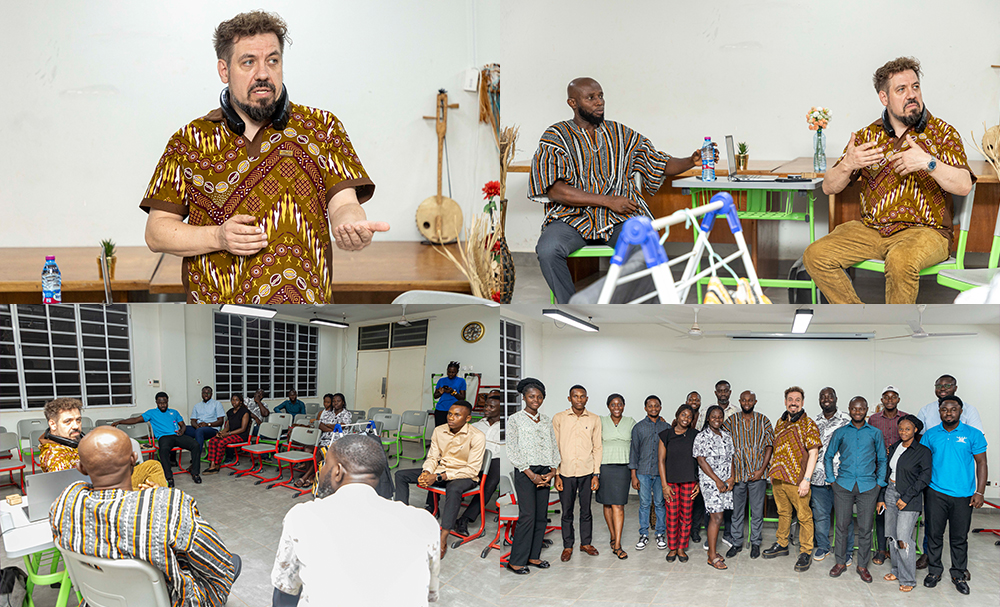
The Kwame Nkrumah University of Science and Technology (KNUST) is hosting the Kumasi Conversations series with its pilot launch exploring the critical discourse on the value of oral history, indigenous knowledge systems, and the power of language in shaping identity, culture, and resistance, under the theme “The Archive in Our Mouths.”
The dialogue, hosted by Associate Professor Marius Storvik, a visiting professor of Law at UiT The Arctic University of Norway, featured Mr. Isaac Adjei Forson, Lecturer at the Department of Languages and Communication Sciences, and examined how knowledge preserved through language, storytelling, symbolism, and cultural practice continues to exist beyond the confines of formal academia.
Mr. Forson described language as a living archive that carries history, culture, and identity beyond written records. “Language is not just a means of communication. It carries history, memory and identity,” he said.
Using dress codes as an analogy, he explained how society often judges intelligence and professionalism based on appearance and speech.
“Just as clothing communicates who we are, language also tells our story,” Mr. Forson noted.
He argued that indigenous languages allow people to express emotions such as love, pain, and belonging in ways that English often cannot.
“There are things I can explain clearly in my language that lose their power when translated into English,” he said.
The speakers also examined how language can be used as a tool of power and resistance.
“Where your language ends, that is where your world ends,” Mr. Forson stressed.
They explained that African societies use language, symbolism, festivals, and satire to hold leaders accountable and maintain social order.
“Our communities have always had ways of correcting wrongdoing through language,” he added. Mr. Forson further encouraged a return to indigenous expression as an affirmation of identity.
Professor Storvik reflected on similar experiences from Norway, sharing how colonial and state systems discouraged the use of indigenous languages, leading to generational loss.
“When a language disappears, a whole way of understanding the world disappears with it,” he observed.
The Kumasi Conversations Series is 16 live, public conversations with KNUST professors, Ghanaian Scholars, and prominent public intellectuals on topics ranging from law and governance to culture, langrage, and social trust. The conversations will explore challenges that Ghana and Norway share, creating unique opportunities for mutual learning.
By: Abigail Ofori Photos: Isaac Kwaku Duah


